
Table of Contents
Discover the benefits of a Battery Charging Post Kit for safer and easier vehicle charging, jump starting, and battery access. Learn features, installation tips, and why remote battery terminals improve vehicle maintenance and reliability
Introduction
Vehicle battery maintenance often becomes difficult when the battery is placed in a tight or hidden location. Many modern vehicles, trucks, and off-road machines position the battery under panels or deep inside the engine compartment. This design improves space efficiency but makes routine tasks such as charging, testing, or jump starting more challenging.
A Battery Charging Post Kit solves this problem by extending battery access points to a convenient and visible location. With remote terminals installed, drivers can quickly connect chargers, jumper cables, or diagnostic tools without reaching into cramped spaces.
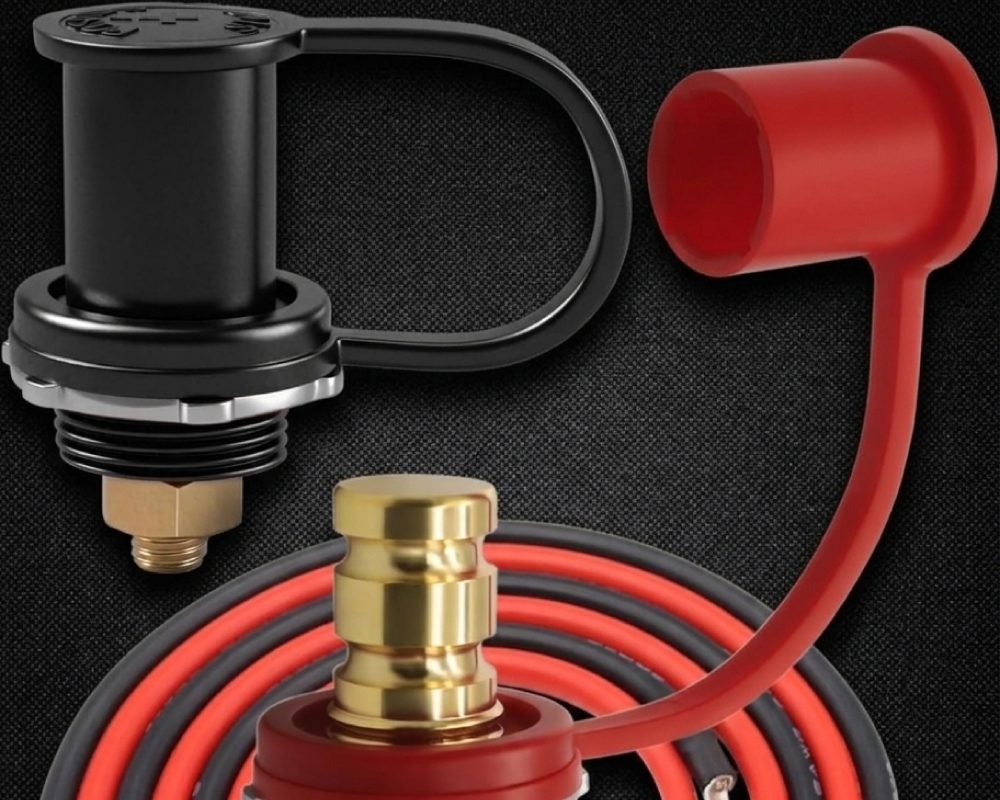
The AMOMD Remote Battery Terminal Migration Kit offers a reliable and practical solution for extending battery connection points. Built with brass terminals and high-quality cables, it provides excellent electrical conductivity and durability while maintaining safe power transfer.
In this guide, you will learn how a Battery Charging Post Kit works, its advantages, main features, installation process, and why it is a valuable addition to many types of vehicles.
Transitioning from the overview, it is helpful to first understand what a Battery Charging Post Kit actually does.
What Is a Battery Charging Post Kit
A Battery Charging Post Kit is an electrical accessory that relocates battery connection points to an easier-to-reach area. Instead of connecting directly to the battery, users can connect chargers or jumper cables to remote terminals mounted elsewhere in the vehicle.
Purpose of Remote Battery Terminals
Easier battery access
Remote battery terminals extend the positive and negative connection points away from the battery. This allows quick access without removing panels or reaching deep inside the engine compartment.
Safer jump starting
By using remote posts, jumper cables can be attached safely in a clear space rather than directly on the battery. This reduces the risk of sparks near the battery.
Simplified charging
Battery chargers and maintainers can connect directly to the remote posts. This makes regular charging faster and more convenient.
Improved maintenance access
Mechanics and vehicle owners can test battery voltage and electrical systems without disturbing the battery installation.
Understanding how these terminals function helps explain why many vehicle owners install them.
Key Features of the AMOMD Battery Charging Post Kit
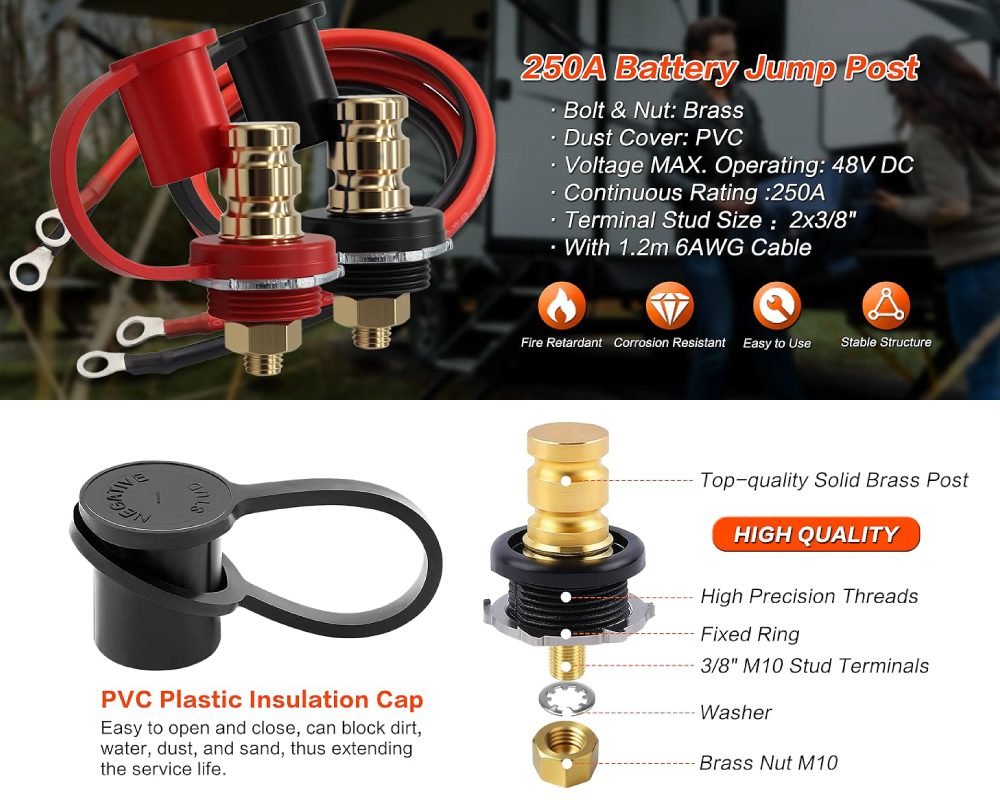
The AMOMD kit includes several well-engineered components designed to ensure safe and reliable electrical connections.
Durable Brass Battery Terminals
Strong corrosion resistance
The terminals are made from high-quality brass. This material resists rust and corrosion, even in humid or harsh environments.
Excellent electrical conductivity
Brass conducts electricity efficiently, helping maintain stable voltage transfer between the battery and remote terminals.
High rated capacity
The terminals are rated for 250 amps at 12 volts. This allows them to handle heavy loads during jump starts or charging.
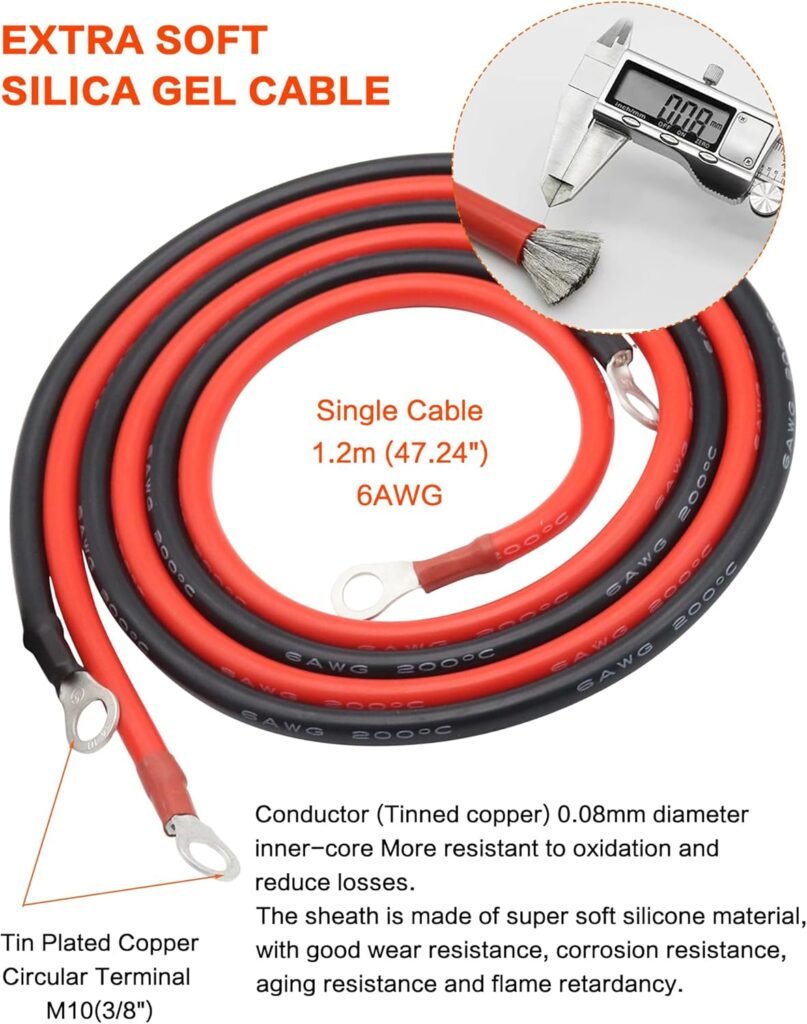
6AWG Ultra Soft Copper Cable
High load capacity
The kit includes two 6 AWG cables rated for up to 600 volts. These thick cables safely handle high current loads.
Tinned copper construction
Each cable uses tinned copper wire strands measuring 0.08 mm. This improves durability and resistance to oxidation.
Flexible cable design
The ultra soft cable material remains flexible even when routed through tight spaces. This helps simplify installation.
Long cable length
With a length of 47 inches, the cables provide enough reach to extend battery terminals to a convenient location.
Compact and Practical Design
Panel mount compatibility
The kit can be installed in panels up to 0.3 inches thick. A 1-1/4 inch hole is required for mounting.
Large cable connection point
The 3/8-inch brass terminal supports large battery cable lugs for secure attachment.
Secure installation
Once mounted, the terminals remain stable and secure even during vehicle vibrations.
After reviewing the components, it becomes clear why this kit is suitable for many types of vehicles.
Applications of a Battery Charging Post Kit
One of the main advantages of a Battery Charging Post Kit is its versatility. It can be installed in many vehicles and machines.
Automotive Vehicles
Passenger cars
Cars with hidden battery compartments benefit greatly from remote terminals for quick charging or jump starting.
Trucks and SUVs
Larger vehicles often require stronger electrical connections. The high-capacity cables support these power demands.
Racing vehicles
In racing environments, quick battery access is essential. Remote posts allow rapid maintenance between runs.
Recreational and Off-Road Vehicles
Travel trailers
Battery terminals installed in convenient areas make it easier to connect chargers and accessories.
UTV and ATV vehicles
Off-road machines often place batteries in difficult locations. Remote posts simplify battery access.
Boats and marine equipment
Marine batteries often sit inside compartments. Remote posts allow charging without opening sealed battery boxes.
Utility Equipment
Lawn mowers
Large riding mowers frequently hide batteries beneath seats or panels.
Agricultural tractors
Farm equipment benefits from easier jump start access during busy workdays.
Because of this wide compatibility, remote terminal kits have become popular among vehicle owners and mechanics.
Benefits of Using a Battery Charging Post Kit
Installing a Battery Charging Post Kit offers several practical advantages that improve vehicle maintenance and safety.
Improved Safety
Reduced spark risk
Connecting jumper cables directly to a battery can create sparks near hydrogen gas. Remote terminals reduce this risk.
Clear connection points
Terminals mounted in open areas make it easier to attach cables safely.
Stable electrical contact
Strong brass terminals ensure secure connections that prevent loose wiring.
Greater Convenience
Faster jump starts
Drivers can connect jumper cables quickly without searching for the battery.
Easy charger connection
Battery maintainers and chargers connect directly to remote posts.
Quick battery testing
Voltage meters can attach easily for quick diagnostics.
Better Vehicle Maintenance
Less battery handling
Since connections happen remotely, the battery remains undisturbed.
Reduced cable wear
High-quality cables prevent damage from repeated use.
Organized wiring layout
Remote terminals create a cleaner and more organized electrical setup.
With these advantages in mind, many drivers consider the installation process.
How to Install a Battery Charging Post Kit
Installation is relatively simple when basic tools are available.
Step 1 Choose a Mounting Location
Accessible position
Select a location that is easy to reach but protected from heat and moving parts.
Panel thickness compatibility
Ensure the mounting panel does not exceed 0.3 inches thickness.
Step 2 Drill the Mounting Hole
Correct hole size
Use a 1-1/4 inch drill bit to create the mounting hole.
Smooth the edges
Clean the edges to prevent damage to cables or terminals.
Step 3 Mount the Terminals
Insert the terminal posts
Place the positive and negative posts through the drilled hole.
Secure with mounting hardware
Tighten the provided hardware to hold the terminals firmly.
Step 4 Connect the Battery Cables
Attach cable lugs
Connect the 6AWG cables to the battery terminals.
Secure connections
Ensure the bolts are tight and stable.
Step 5 Test the Installation
Check voltage reading
Use a voltmeter to verify the terminals are connected properly.
Test with charger or jumper cables
Confirm that power flows correctly through the remote posts.
After installation, the remote terminals will provide reliable battery access.
Tips for Safe Use
Proper usage ensures long-term reliability.
Follow correct polarity
Positive to positive
Always connect the positive terminal first.
Negative grounding
Ensure the negative connection is secure and properly grounded.
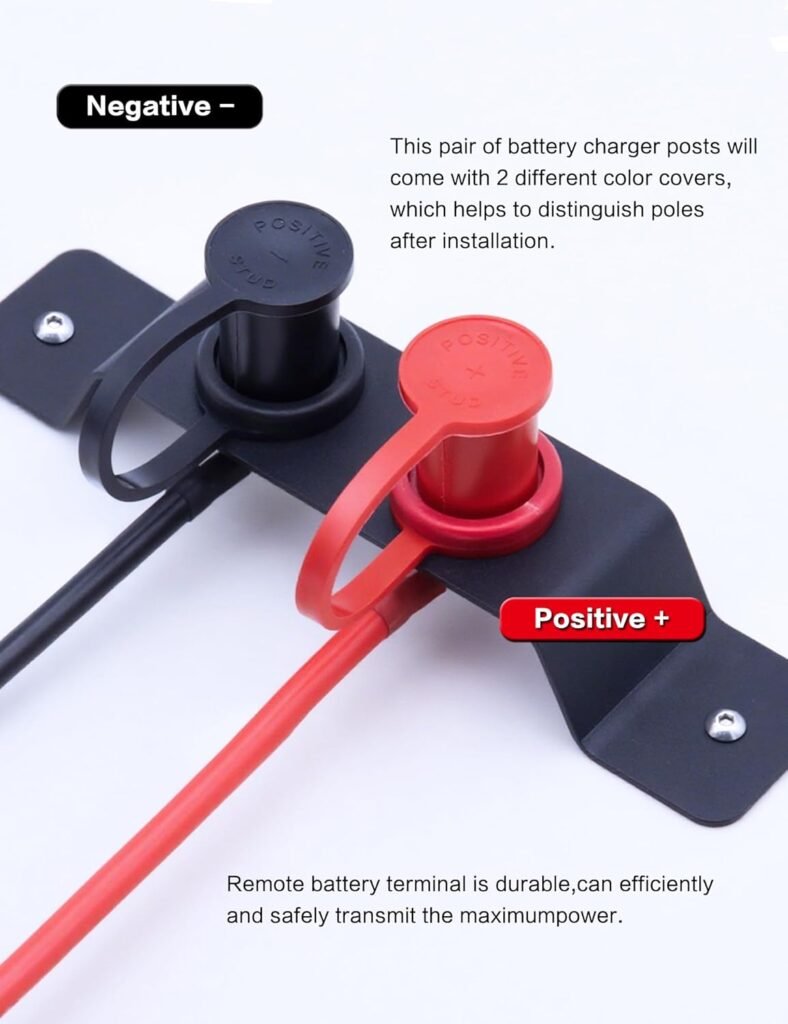
Protect the terminals
Use terminal covers
Covers prevent accidental contact with metal tools.
Keep terminals clean
Regularly remove dirt and corrosion buildup.
Inspect cables regularly
Check for wear
Look for cracks or frayed wires.
Replace damaged cables
Damaged wiring should be replaced immediately.
Routine inspection keeps the system functioning safely.
Why the AMOMD Battery Charging Post Kit Is a Good Choice
Several factors make this product stand out among remote terminal kits.
Strong electrical performance
250 amp rated terminals
These terminals handle high current loads safely.
High-quality copper wiring
Tinned copper wires ensure excellent conductivity.
Durable construction
Corrosion resistant materials
Brass components resist rust and oxidation.
Heavy duty cables
Thick 6AWG wiring supports demanding electrical tasks.
Versatile compatibility
Works with many vehicles
The kit supports cars, trucks, tractors, and recreational vehicles.
Flexible cable routing
Long cables allow installation in various vehicle layouts.
These features make the kit reliable for daily use and emergency situations.
Conclusion
A Battery Charging Post Kit is a simple yet powerful upgrade for vehicle electrical systems. By relocating battery connection points to an accessible location, it improves safety, convenience, and maintenance efficiency.
The AMOMD Remote Battery Terminal Migration Kit provides durable brass terminals, flexible 6AWG cables, and reliable electrical performance. Its ability to support high current loads makes it suitable for jump starting, charging, and battery testing across many vehicle types.
Whether you own a car, truck, off-road vehicle, or agricultural machine, installing remote battery terminals can save time and reduce frustration during maintenance. With proper installation and regular inspection, this kit ensures dependable battery access whenever it is needed.
Check out more of our posts here.
As an Amazon Associate, I earn from qualifying purchases.
What is a Battery Charging Post Kit used for?
A Battery Charging Post Kit extends the battery terminals to an accessible location. This allows you to easily connect a battery charger or jumper cables without reaching the battery directly.
What is a Battery Brass Jump Post?
A Battery Brass Jump Post is a durable brass terminal that serves as an external connection point for jump starting or charging a vehicle battery.
Is a Battery Charging Post Kit safe to use?
Yes. When installed correctly, it provides a safe and convenient connection point for charging and jump starting while reducing the risk of accidental sparks near the battery.
Can this kit be used on different vehicles?
Yes. Most Battery Charging Post Kits are compatible with cars, trucks, SUVs, tractors, boats, UTVs, and ATVs.
Why are brass terminals used in battery posts?
Brass is used because it offers excellent electrical conductivity and strong resistance to corrosion and oxidation.
Does installing a remote battery terminal affect vehicle performance?
No. The kit simply extends the battery connection point and does not change the vehicle’s electrical performance.
How difficult is the installation process?
Installation is generally simple. It usually involves drilling a mounting hole, connecting the cables to the battery, and securing the remote terminals in place.
Can the Battery Charging Post Kit help during emergencies?
Yes. The remote terminals make it faster and easier to connect jumper cables when a vehicle battery is dead.
How do I maintain remote battery terminals?
Keep the terminals clean, check cable connections regularly, and protect them from moisture or dirt to ensure reliable performance.