Table of Contents
Learn how to build strong chest muscles at home with effective chest workouts using simple home gym equipment. A complete, beginner‑to‑advanced guide.
Introduction to Chest Workouts at Home
Chest workouts play a key role in building upper‑body strength, improving posture, and enhancing overall fitness. Many people believe that developing chest muscles requires expensive gym machines, but that is not true. With the right approach and proper home gym equipment, chest workouts can be just as effective at home.
Before diving into specific equipment and exercises, it is important to understand why chest workouts deserve focused attention. The chest muscles, especially the pectorals, are involved in many pushing movements used in daily activities. Training them properly improves functional strength and balances the upper body.
As we move forward, this guide will break down chest work step by step, starting with muscle basics and gradually progressing to equipment, exercises, routines, and safety tips.
Understanding Chest Muscles and Their Function
Primary chest muscles involved in workouts
The chest is mainly made up of the pectoralis major and pectoralis minor. The pectoralis major is the large muscle responsible for pushing movements, while the pectoralis minor supports shoulder stability. Effective chest work target both muscles through controlled resistance and proper form.
Understanding these muscles helps you choose exercises that deliver better results. When chest workouts are performed correctly, they also engage supporting muscles such as the triceps and shoulders, creating balanced upper‑body strength.
Why chest workouts matter for overall fitness
Chest workouts improve pushing power, enhance posture, and contribute to a symmetrical physique. Strong chest muscles support shoulder joints and reduce the risk of injury. In addition, regular chest work boost metabolic activity and support long‑term muscle growth.
With this muscle knowledge in mind, it becomes easier to select the right home gym equipment for effective chest workouts.
Benefits of Doing Chest Workouts at Home
Convenience and consistency
One of the biggest advantages of home‑based chest workouts is convenience. Without travel time or crowded gyms, it becomes easier to stay consistent. Consistency is the most important factor in muscle development and strength gains.
Because home workouts are flexible, you can easily fit chest work into your daily schedule. This leads to better adherence and long‑term progress.
Cost‑effective training
Home gym equipment is often a one‑time investment. Compared to gym memberships, home chest workouts save money over time. Many effective chest work require minimal equipment, making them accessible to beginners.
Now that the benefits are clear, it is time to explore the essential equipment needed for chest work at home.
Essential Home Gym Equipment for Chest Workouts
Dumbbells for chest workouts
Dumbbells are among the most versatile tools for chest workouts. They allow a full range of motion and help correct muscle imbalances. Exercises like dumbbell presses and flyes directly target the chest muscles.
Using adjustable dumbbells adds flexibility, allowing gradual progression as strength improves. This makes them ideal for both beginners and advanced users.
Resistance bands for chest activation
Resistance bands are lightweight yet effective for chest work. They provide constant tension throughout the movement, which improves muscle activation. Bands are especially useful for warm‑ups and high‑rep chest workouts.
Because resistance bands are portable, they are perfect for small spaces and travel work.
Push‑up bars and bodyweight tools
Push‑up bars enhance traditional push‑ups by increasing range of motion. This leads to deeper chest activation and reduced wrist strain. Bodyweight‑based chest workouts using these tools are highly effective when performed with proper technique.
After reviewing equipment options, the next step is learning how to structure chest workouts correctly.
Two Recommended Equipment for Chest Workouts
Amazon Basics Rubber Hex Dumbbell Hand Weight
Product Description
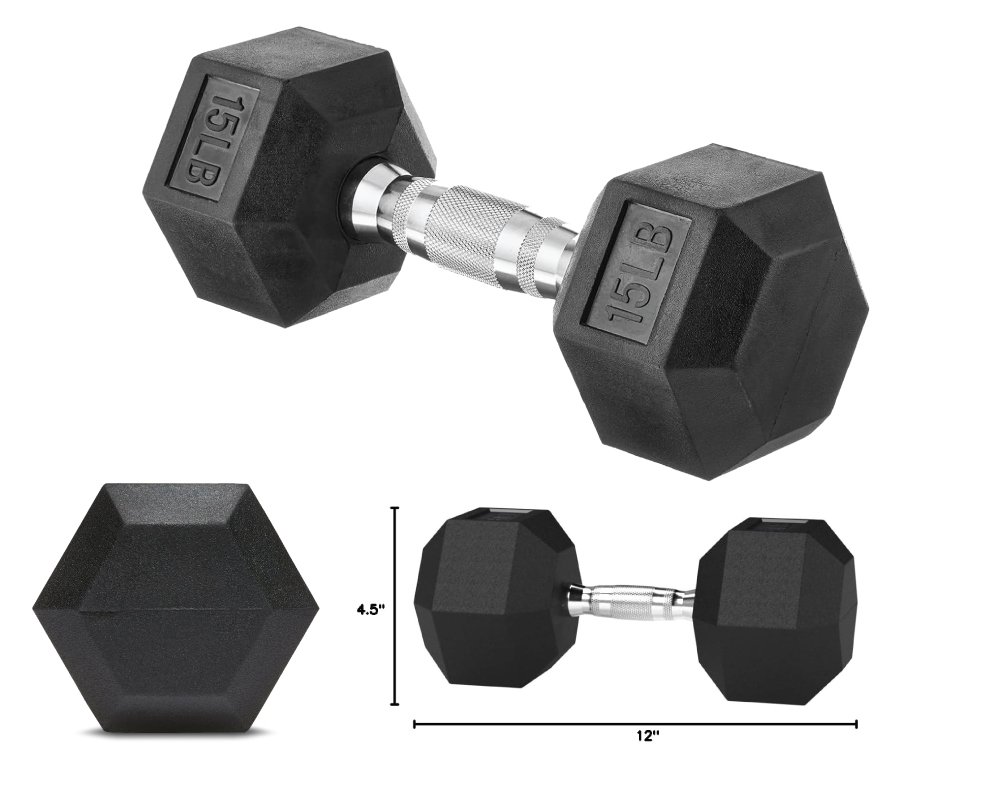
The Amazon Basics Rubber Hex Dumbbell is a reliable strength-training essential designed for both beginners and experienced fitness users. Built with a solid cast-iron core and fully rubber-encased heads, this dumbbell delivers long-lasting durability while protecting floors and workout surfaces.
Its hexagon-shaped ends prevent unwanted rolling, making it safer and more convenient for home gyms. The textured, non-slip handle provides a secure and comfortable grip, allowing better control during pressing, lifting, and functional training movements.
Perfect for chest work, arm training, core exercises, and full-body strength routines, this single dumbbell is ideal for progressive resistance training. Whether you’re expanding an existing setup or starting a home gym, this dumbbell offers dependable performance and versatile use.
Key Benefits
- Solid cast-iron core for long-term strength
- Rubber-encased heads protect floors and reduce noise
- Hex design prevents rolling and improves storage
- Non-slip, contoured handle for comfort and control
- Suitable for home or gym-based resistance training
Specifications Table
| Feature | Details |
|---|---|
| Brand | Amazon Basics |
| Product Type | Rubber Hex Dumbbell |
| Weight | 15,20,30 and 40 Pounds |
| Color | Black |
| Material | Rubber Encased Cast Iron |
| Handle Material | Rubber |
| Handle Diameter | 1.34 inches |
| Item Dimensions | 12″ L × 4.5″ W |
| Item Height | 3.98 inches |
| Number of Pieces | 1 |
| Special Feature | Non-Slip Grip |
| Target Body Parts | Arms, Chest, Back, Core, Legs |
| Included Components | Dumbbell |
| Warranty | One-Year Limited Warranty |
| ASIN | B074DZ5YL9 |
| Customer Rating | 4.7 out of 5 stars |
| Best Sellers Rank | #2 in Exercise & Fitness Dumbbells |
RitFit PVC Encased Round Dumbbell Set – 2 × 5 LB
Product Description
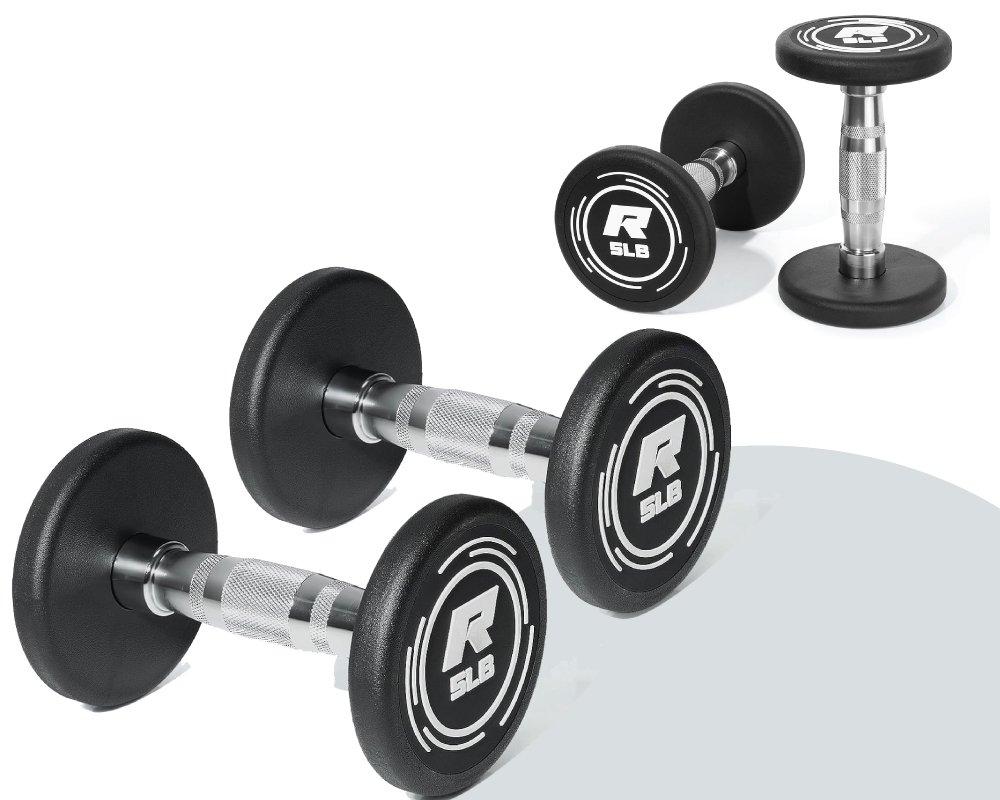
The RitFit PVC Encased Round Dumbbell Set (2 × 5 lb) is designed for users who want smooth handling, compact storage, and dependable durability. Made with a solid steel core and protective PVC coating, these dumbbells are built to withstand daily workouts without damaging floors or equipment.
Unlike traditional hex dumbbells, the round design offers evenly distributed weight, creating balanced resistance for controlled strength training. The knurled ergonomic handle improves grip security while reducing hand fatigue, making work more comfortable and efficient.
Ideal for home gyms, light strength training, toning workouts, and rehabilitation exercises, this pair of dumbbells suits beginners and experienced users alike. Their space-saving, one-piece construction allows easy placement in small workout areas.
Key Benefits
- Durable steel core with non-toxic PVC coating
- Round design ensures balanced weight distribution
- Knurled handle enhances grip and safety
- Floor-friendly and space-saving construction
- Suitable for beginners to advanced fitness levels
Specifications Table
| Feature | Details |
|---|---|
| Brand | RitFit |
| Product Type | PVC Encased Round Dumbbell Set |
| Weight | 5 Pounds (Each) |
| Unit Count | 2 Dumbbells |
| Color | Black |
| Material | Alloy Steel, Polyvinyl Chloride (PVC) |
| Handle Type | Knurled Ergonomic Handle |
| Item Height | 4.7 inches |
| Construction | One-Piece Solid Design |
| Weight Distribution | Evenly Balanced |
| Target Use | Strength Training, Toning, Home Workouts |
| Manufacturer | RITFIT |
| ASIN | B0CF3VXWXB |
| Customer Rating | 4.9 out of 5 stars |
| Best Sellers Rank | #428 in Exercise & Fitness Dumbbells |
Structuring Effective Chest Workouts at Home
Warm‑up strategies for chest workouts
Warming up prepares muscles and joints for exercise. A proper warm‑up increases blood flow and reduces injury risk. Light resistance band movements and arm circles are excellent for chest workout preparation.
Spending five to ten minutes warming up ensures better performance during the main workout.
Choosing the right intensity
Intensity determines how challenging chest work feel. Beginners should start with lighter resistance and focus on form. Gradually increasing resistance over time leads to safe muscle growth.
Balancing intensity and recovery is essential for sustainable progress.
With structure established, it is time to explore specific chest exercises using home equipment.
Best Chest Workout Exercises Using Home Equipment
Dumbbell chest press variations
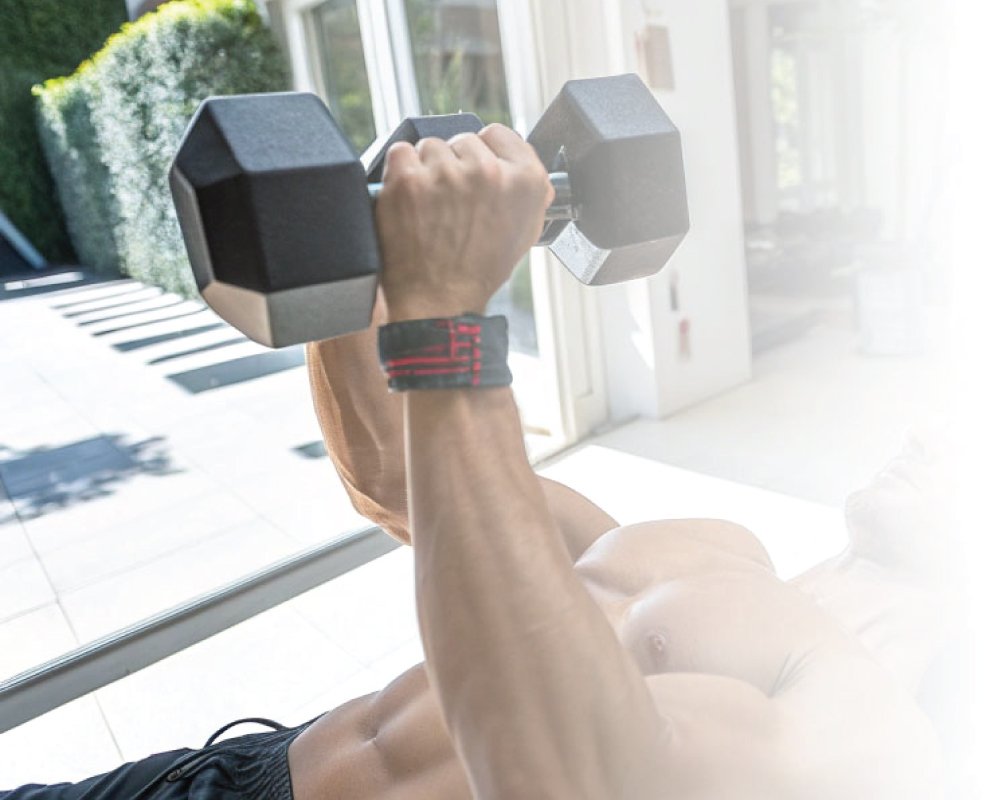
The dumbbell chest press is a foundation exercise for chest work. It targets the pectorals while engaging triceps and shoulders. Performing presses on the floor or bench allows flexibility based on available space.
Using slow, controlled movements increases muscle engagement and improves strength gains.
Recommended time and tempo for barbell or dumbbell presses
For effective chest workouts, barbell or dumbbell press exercises should be performed for 30 to 60 seconds per set, depending on load and experience level. Beginners can aim for 8 to 10 controlled repetitions within this time, while intermediate and advanced users can work within 10 to 15 repetitions.
A slow tempo works best, with about 2 seconds to lower the weight and 1 second to press upward. Rest periods of 60 to 90 seconds between sets allow sufficient recovery while maintaining workout intensity.
Chest fly movements at home
Chest flyes stretch and contract the chest muscles effectively. Dumbbells or resistance bands can be used for this exercise. Fly movements are especially useful for shaping and defining the chest.
Maintaining proper form is critical to avoid shoulder strain.
Push‑up variations for chest workouts
Push‑ups are a classic chest workout exercise. Variations such as incline, decline, and close‑grip push‑ups change muscle emphasis. These variations help target different areas of the chest.
Push‑ups also build functional strength and core stability.
With exercise selection covered, the focus now shifts to creating a complete workout routine.
Sample Chest Workout Routine for Home Training
Beginner chest workout routine
A beginner routine should include basic exercises with moderate volume. Performing chest workouts two to three times per week allows sufficient recovery. Consistent practice builds a solid foundation.
Gradual progression ensures long‑term success without burnout.
Intermediate and advanced routines
Intermediate and advanced chest work involve higher intensity and volume. Supersets and tempo variations increase challenge. These techniques stimulate muscle growth and prevent plateaus.
Advanced routines require careful attention to recovery and nutrition.
After building routines, it is important to understand common mistakes to avoid.
Common Mistakes in Home Chest Training
Poor form and posture
Improper form reduces effectiveness and increases injury risk. Chest workouts should always be performed with controlled movements and proper alignment.
Focusing on quality over quantity leads to better results.
Overtraining the chest muscles
Training the chest too frequently can slow progress. Muscles need time to recover and grow. Rest days are just as important as workout days.
Balancing chest workouts with other muscle groups supports overall fitness.
With mistakes addressed, safety considerations become the next priority.
Safety Tips for Chest Workouts at Home
Preventing injuries during chest workouts
Using proper warm‑ups and correct resistance reduces injury risk. Avoid rushing movements and prioritize control. Listening to your body is essential during chest work.
Maintaining consistency safely
Consistency should never come at the cost of safety. Gradual progression and adequate rest ensure sustainable improvement.
Finally, understanding long‑term progress strategies brings the guide together.
Long‑Term Progress and Chest Workout Results
Tracking progress effectively
Tracking repetitions, resistance, and form improvements helps measure progress. Consistent tracking motivates continued effort and highlights areas for improvement.
Staying motivated with home chest workouts
Setting realistic goals keeps motivation high. Variety in chest workouts prevents boredom and encourages long‑term commitment.
Conclusion
Chest workouts using home gym equipment offer a practical and effective way to build strength and muscle. With proper structure, equipment selection, and consistency, impressive results are achievable without stepping into a gym. By following this complete guide, chest workouts can become a sustainable part of a healthy fitness routine.
Check out more of our posts here.
As an Amazon Associate, I earn from qualifying purchases.
How often should I do chest workouts at home?
Chest work can be performed two to three times per week, depending on your fitness level. Allow at least 48 hours of rest between sessions so the chest muscles can recover and grow properly.
Can chest workouts at home build muscle effectively?
Yes, chest workouts done at home can build muscle effectively when proper form, progressive resistance, and consistency are maintained. Using dumbbells, resistance bands, and bodyweight exercises provides enough stimulus for muscle growth.
What home gym equipment is best for chest workouts?
Dumbbells, resistance bands, push-up bars, and adjustable benches are among the best tools for chest workouts at home. These allow a wide range of movements that fully activate the chest muscles.
Are chest workouts suitable for beginners?
Chest workouts are suitable for beginners when exercises are performed with lighter resistance and controlled movements. Beginners should focus on form first before increasing weight or intensity.
How long should a chest workout session last?
A typical chest workout session at home can last between 30 and 45 minutes. This includes warm-up time, main exercises, and short rest periods between sets.
Can chest workouts reduce chest fat?
Chest workouts help strengthen and tone chest muscles, but fat loss occurs through overall calorie balance. Combining chest workouts with full-body training and proper nutrition supports fat reduction.
Do chest workouts also train shoulders and triceps?
Most chest workouts naturally engage the shoulders and triceps, especially pressing and push-up movements. This makes chest workouts effective for overall upper-body strength.